If you live in a home or manage a property with an irrigation system, pool, hot tub, fire sprinkler system or other potential cross-connection, you have an important role to play in protecting water quality. Water providers make sure your tap water is safe to drink and use. Once the water is on your property or in your home, it’s your responsibility to make sure your water stays safe.
What is backflow?
Backflow is the reversal of the normal flow of water. In this case, backflow is when water flows from a property back into the community drinking water system. The main risk for public health is when contaminated or otherwise non-potable water flows back into pipes that carry drinking water to homes and businesses. Controlling backflow is one way you can help to protect your drinking water from contamination.
What causes backflow?
Backflow can occur when the flow of water reverses because the water pressure in the public water system is lower than the pressure on a residential property. Public water systems can lose pressure because of hydrant use to put out a fire or a water main break. In some cases, it can occur when water pressure is higher on a residential property due to pumping water from a private well or pressure-washing.
What is a cross-connection?
A cross-connection is any link between a public water system and a source of non-potable water where the two can mix. This can be between a drinking water pipe and a home sprinkler system, or a garden hose submerged in a pool or hot tub.
Controlling backflow protects water quality
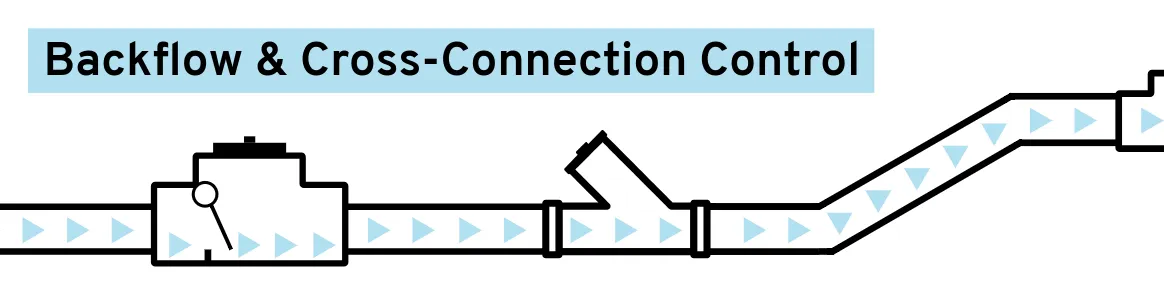
A backflow prevention assembly works to keep drinking water separate from water that is not safe to drink. The device makes sure non-potable water can’t flow back into the public water system. This helps to maintain water quality and prevent contamination of public drinking water systems.
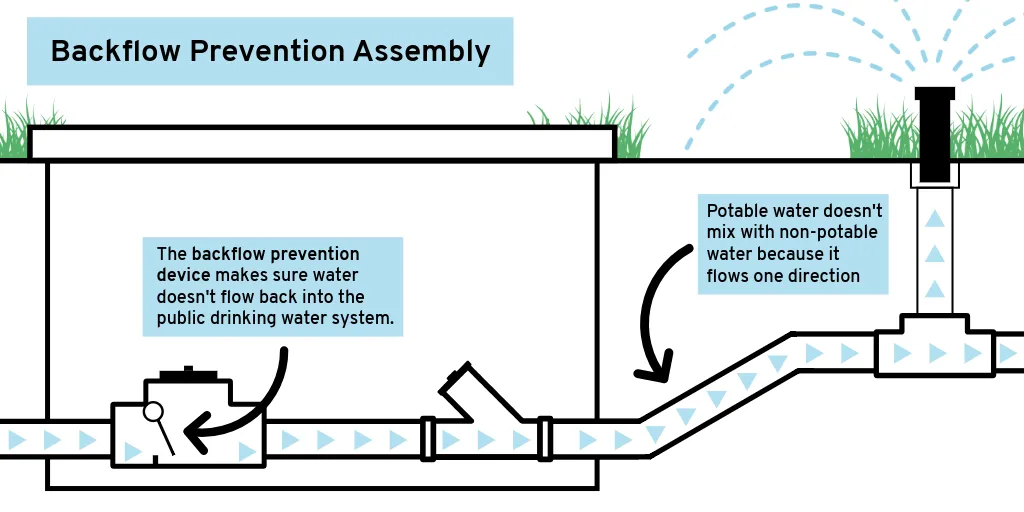
When cross-connections are not controlled, backflow is a risk. This can bring waterborne illnesses, pool chemicals, fertilizer, weed killer, and other harmful compounds into the water distribution system that delivers drinking water to you and other members of your community. If this were to happen, your water provider would issue a drinking water advisory and flush the contaminants out of the drinking water system.
Who needs to have a backflow prevention assembly?
If you have a cross-connection on your property or a property you manage, you need to follow State of Oregon rules. This means having a backflow assembly installed, maintained, and tested each year. This applies to you if you have any of these common cross-connections on your property:
- in-ground irrigation system
- pool
- hot tub
- hose-end spray attachments (for fertilizer or weed killer)*
- private well
- fire sprinkler system
- water feature (like a fountain or pond)
- other potential cross-connection
If you are unsure whether you have or need a backflow prevention assembly, ask your water provider.
*Oregon plumbing code requires all hose bibs and outdoor spigots to have a backflow prevention device called an “atmospheric vacuum breaker (AVB)” or “hose connection backflow preventer”. This is because a hose bib is an “indirect” or “potential” cross-connection, meaning backflow can only occur under certain unique circumstances.
Backflow testing
You must have your backflow assembly tested by a State-certified backflow tester at least annually. You or the certified tester will then submit the test results to your water provider. Your water provider will let you know what method to use (email, mail, online form, third-party system) and when results are due. Expand the section below to learn more about your water provider's program:
Gladstone, City of 503-656-7957
Lake Grove Water District 503-636-1617
Sandy, City of 503-668-5310
Troutdale, City of 503-674-3300