Do your part to use water wisely this summer. It's just the right thing to do.
Oregon just experienced one of its warmest winters on record. It has also been a dry spring here in Oregon and many other western states. As we head into summer, it’s important to know that water sources and supplies are different across the state.
The greater Portland metro region has five main drinking water sources. Learn more about how water providers work together to manage each of these water sources below. There are no drought declarations in the greater Portland metro area.
Right now, 22 Oregon counties and two neighboring states (Washington and Idaho) have drought declarations. See the bottom of this page for links to resources focused on drought in Oregon.
Here is what you can do to use water wisely this summer:
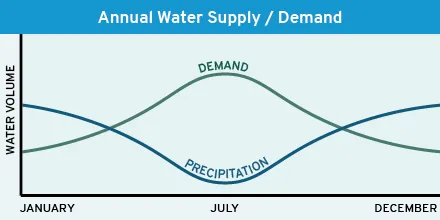
Activities like watering lawns and washing cars double or triple our region’s water use during the summer. At the same time, there is less rainfall to refill our local water sources. That’s why it makes sense to use water wisely in summer. Here are five tips to get you started today:
- Periodically check your watering system for leaks, blockages, and other issues. Be sure to fix issues quickly to achieve maximum water savings.
- Create a watering schedule. Water deeply twice weekly instead of every day.
- Sign up for the Weekly Watering Number so you know how much water your garden or landscape needs each week.
- Wash your car at a carwash that recycles water instead of washing it at home. This helps protect our local waterways too!
- Check your toilet for leaks. Leaks are common and can waste a lot of water.
Water is too valuable to waste. Learn more ways to use water wisely at home and in the garden.
How water providers work together to manage the region’s drinking water sources
Regional Water Providers Consortium members work closely all year long, especially in summer. Managing the region’s water collaboratively makes our water supplies more resilient. This proactive approach also helps water providers address any issues that may arise, including water shortages.
Find out more about your water and how it responds to summer drought conditions
The Bull Run Watershed is primarily a rain-fed system, so there is less water entering the storage reservoirs in the summer when rainfall decreases. The 9.9 billion gallons of stored water supply in the reservoirs typically meets Portland and its wholesalers’ needs through the summer. The Columbia South Shore Well Field can also be used to supplement surface water or replace the Bull Run supply entirely due to turbidity or other issues. The Portland system is resilient to drought and other water shortage events due to its access to two water sources.
The Clackamas River is carefully managed to meet all water needs. The community works together to conserve water to ensure there is enough water for people and fish. The river system has no drinking water storage facilities, such as dams, so municipal water providers and other users rely on natural stream flows or “run of river” to meet water needs all times of year, including the summer when stream flows go down. Fortunately, some water in the watershed is stored as snow which melts over time, keeping water cool for fish and providing a gradual release of water into the river. The Clackamas River is also fed by rain and groundwater.
To help protect migrating salmon and steelhead, each year between mid-August and early October the Clackamas River Water Providers, whose members use the Clackamas River as a drinking water source, ask their customers to participate in the annual “Fish On the Run, Irrigation Done!” campaign. This education campaign focuses on reducing or shutting- off outdoor watering by the beginning of September to keep more water in the river for the fall fish migration.
The Trask / Tualatin River system is highly managed by its users and regulators to ensure water supplies are sufficient to meet peak summer demand. Barney Reservoir and Scoggins Reservoir (Hagg Lake) allow the Joint Water Commission to store water from the winter for later release in the summer. Some providers also have access to other sources, such as aquifer storage and recovery wells, the Bull Run Watershed, and the Columbia South Shore Well Field.
The Willamette River is a reliable year-round water supply. The system is highly managed by a number of dams operated by the US Army Corps of Engineers. This enables sufficient water supplies to meet peak summer demand and other important flow targets for environmental, agricultural, and drinking water needs.
To provide additional reliability, the City of Wilsonville's former water supply (a system of eight local wells) is available for use during dry periods or other emergencies. The Tualatin Valley Water District and the Cities of Hillsboro and Beaverton are working on developing the Willamette Water Supply System which will come online in late 2026. This new system will enable project partners to manage their various supply sources to respond to drought or other supply interruptions as well as recover more quickly from a large natural disaster.
Groundwater is less vulnerable to short-term water shortages and extreme weather events than surface water sources, but it is still vulnerable to drought and overuse. Water providers that rely on groundwater depend on rain, stream flows, and snowmelt to replenish aquifers. Depending on the geology, this recharge can take weeks, years, decades, or longer to occur. Groundwater levels are regularly monitored to track aquifer conditions.
Aquifer Storage and Recovery (ASR) is a resource that some water providers use to supplement their water supply during drier, warmer months when customer’s water demand is high. It involves putting treated drinking water into aquifers when water is plentiful in the winter and then pumping it out in the summer.