
How to access water from your water heater during an emergency
In an emergency, such as a severe winter storm or an earthquake, your home’s water service may be temporarily unavailable.
If that occurs, your home’s water heater could provide you with 30-80 gallons of water for drinking, cooking, and hygiene. (Tankless heaters do not provide this option.)
Before accessing water from your water heater:
- Locate your water heater: Typically water heaters are located in the basement or garage of free standing homes, and in closets of apartments and manufactured homes.
- Turn off your home's water supply: Taking this step, especially after a big earthquake, could help ensure that the water remains in your tank, and that its quality isn’t compromised or unsafe to use. Emergency water shut off valves are usually found in the basement, crawlspace, or garage of most homes, or outside by the home’s foundation. Use this valve to turn your home’s water supply off.
Instructions for accessing water from your water heater:
- Turn off your water heater’s power source. This step is crucial to ensuring your safety. You may want to keep a flashlight, safety goggles, gloves, and a screw driver in a location that is easily accessible.
Electric water heaters: Shut off your water heater’s power by flipping the correct switch on your electrical panel. (Taking the time to correctly identify the correct circuit breaker beforehand is recommended.)
Natural gas water heaters: Locate the on/off switch on the water heater and turn the knob to the pilot setting — do not turn it completely off.
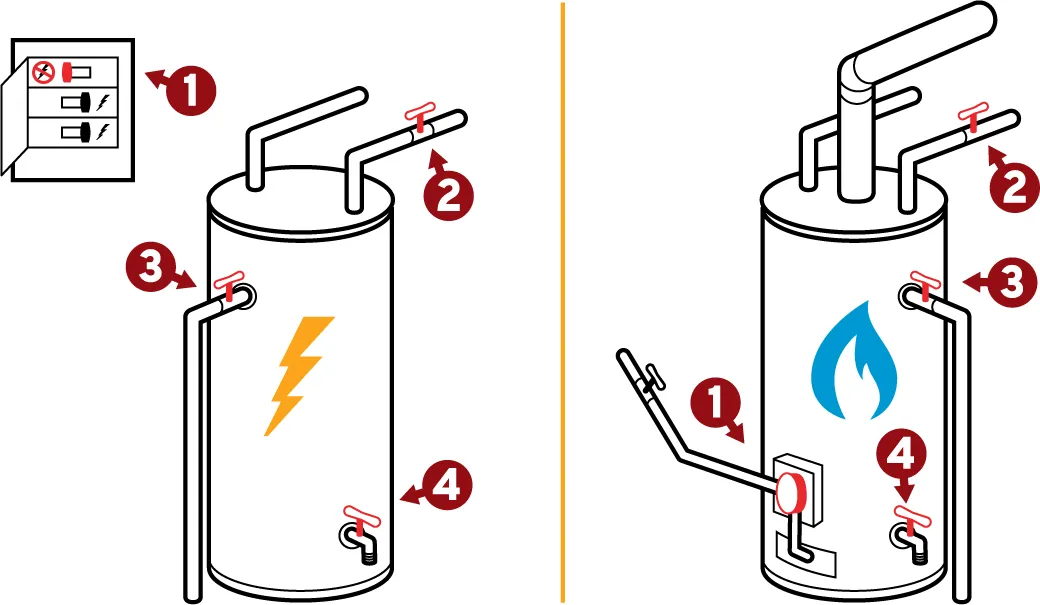
- Turn off your water heater’s water supply. Locate the water shut-off valve and turn it clockwise until it stops. This valve is typically located on the top of the water heater.
- Let air into your water heater. You can do this by opening the relief valve (flip the handle so that it sticks straight up or out) located on the side of the tank or by turning on hot water spigots in the main living area or upstairs in your home. This will help release water from your water heater.
- Locate the drain valve at the bottom of your water heater and release water from your tank as needed. Place a clean container under the drain valve spigot to capture the water and turn the spigot or screw of your water heater’s drain valve to the left. Be careful, because the water may be very hot. Wearing gloves and safety glasses for your protection is recommended. Turn the spigot or screw to the right to stop the flow of water. Repeat this process as often as needed until the tank is empty.
Treat or filter any water that you use for drinking, food preparation and hygiene. Here’s how:
- Bring the water to a rolling boil for at least one minute. Let it cool, and then use.
- Put water in a sanitized container and treat it with unscented liquid chlorine bleach. To sanitize the container, vigorously shake a bleach solution (4 cups water and 1 teaspoon of bleach) for 30 seconds, making sure to cover all surfaces. Pour out solution and let air dry. Fill your container with water and treat it by adding 1/8 teaspoon of bleach per gallon.
- Use a personal water filter to remove any bacteria or parasites. Be sure to carefully read and follow the manufacturer’s instructions.
Water heater maintenance tips
Water heater maintenance plays a critical role in the availability and quality of water contained in your water heater.
Properly brace your heater to the wall so that it is more likely to remain connected to the wall and your water system.
Flush your water heater annually. Doing this can significantly decrease the amount of sediment build up, and may improve the quality of the water in your water heater.